August 18, 2026, 3:53 pm


Manal Mujahid | Al-Hodeidah, Yemen
In the corridors of contemporary Yemeni administration, a phenomenon of crippled empowerment has emerged as one of the ugliest forms of systematic exclusion, a policy practiced with calculated malice against the people of Al-Hodeidah.
The scene that keeps repeating itself across Al-Hodeidah Governorate and its districts does not reflect any lack of competence among the people of the province. It exposes an administrative trap set deliberately for every local professional appointed to a leadership position: he is left without the authority or the tools he needs, only to be accused of failure later on.
A closer examination of the appointment mechanisms reveals that an official born in Al-Hodeidah is given the title but denied the power. He may be appointed as a director or as the head of an institution, only to discover from his very first day that real control over finances, administrative decisions, and the appointment of subordinates does not lie in his hands.
This is governance by remote control, a system in which the real strings are pulled by supervisors and officials from outside Al-Hodeidah who hold sweeping authority, backing, and funding, while the Hodeidah-born director is reduced to a legal façade, left to carry the blame for every mistake, for institutional collapse, and for corruption.
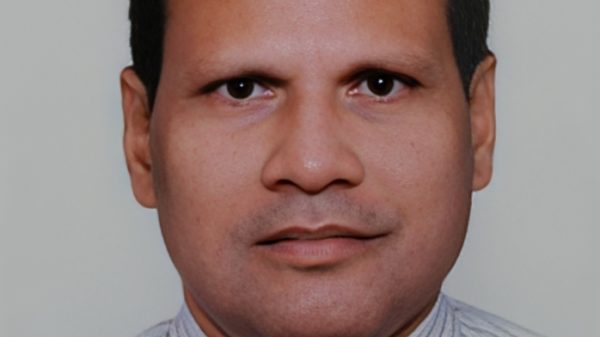
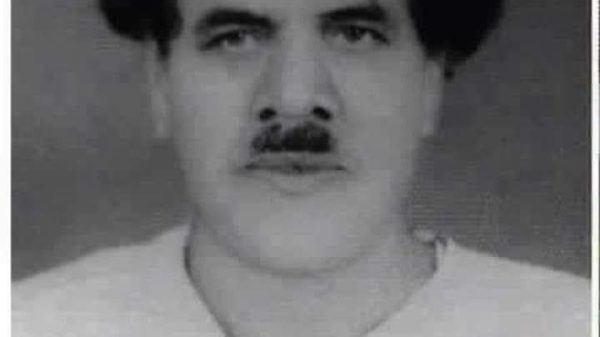
This pattern of exclusion cannot be discussed without addressing what happened to Dr. Mukhtar Madabesh, a native of Al-Hodeidah, during his tenure at the Bajil Cement Factory.
He was appointed at a critical moment. Instead of being given the resources needed to revive this vital economic institution, he faced imposed restrictions, his authority was curtailed, and the administrative and financial support available to him was withdrawn in a systematic manner.
The objective was not to reform the factory but to engineer Dr. Madabesh s personal failure and, through it, to discredit the capabilities of Hodeidah-born professionals as a whole. Once he was removed, he was replaced by someone from outside the province, and that individual was granted every condition necessary for success, including the budgets that had been denied to his predecessor.
It is a subtle form of discrimination, designed to persuade public opinion that the people of Al-Hodeidah are administratively unqualified, when in truth they are constrained rather than incapable.
There are still Hodeidah-born officials holding positions of authority, but many of them, regrettably, exist only as names on paper. The official who arrives from the highlands or from neighboring areas is usually the one who makes the decisions, controls the spending, and sets the policies.
This troubling discrimination across the districts of Al-Hodeidah is no longer a matter of isolated individual practices. It has become a recurring pattern aimed at emptying the region of its elites and its leaders and replacing them with figures loyal to traditional centers of power, all under the pretext of administrative necessity.
The continuation of this destructive pattern means the continued deterioration of services and institutions throughout Al-Hodeidah Governorate. Genuine administration requires full authority over decision-making, and this is precisely what the people of Al-Hodeidah are deliberately denied.
They want a weak Hodeidah official who can serve as a scapegoat for their own failures, and they want the outsider to be strong so that he can appear before the public as the savior and the capable administrator.
The professionals of Al-Hodeidah, who have built and served their communities under the most difficult circumstances, do not lack intelligence, administrative ability, or leadership skills. What they lack is justice in the distribution of power and authority.
The time has come to break these constraints and to end the policy of guardianship imposed on Al-Hodeidah and its people. The people of Al-Hodeidah will no longer accept being mere decorations in offices whose keys are held by others.
𝐂𝐡𝐢𝐞𝐟 𝐄𝐝𝐢𝐭𝐨𝐫 :
𝐌𝐝. 𝐒𝐚𝐝𝐢𝐤𝐮𝐫 𝐑𝐚𝐡𝐦𝐚𝐧 𝐑𝐮𝐦𝐞𝐧