August 9, 2026, 1:59 am



The Origins
The “Cesare d’Oro” (Golden Caesar) International Award was established in 1974 through the will and initiative of the Prince of the Holy Roman Empire, the Honorable Dr. Giovanni Alliata di Montereale. By establishing this award, he sought to promote and formalize the rightful recognition of those who—through their work, intelligence, and sacrifice—contributed to the social evolution of their country within a framework of increasing closeness, understanding, and brotherhood among peoples, races, and ethnicities. A significant milestone for these purposes was the conferment of the Social Merit Award in 1979 to Mother Teresa of Calcutta, recognized as a “Lady of Humanity” for her pursuit of high moral, social, and Christian charity values, and elected as the godmother of the poor and the sick for her relentless efforts toward the weak and the unfortunate.
The Meaning of the Award
The “Cesare d’Oro”—the profound significance of which lies in the belief that a society is just only if it is capable of protecting and valuing the human personality—is granted annually to Diplomats, Professionals, Entrepreneurs, Artists, Politicians, Men of Culture, Athletes, and Industrialists who have achieved significant success in their respective fields. Since its inception, the Award has qualified as a prestigious initiative intended to honor every “new Caesar”—those men and women, famous or little-known, who have imposed themselves with tenacity and sacrifice, merging a sense of duty with a moral obligation of service toward the progress of the Nation and humanity.
Objectives of the Award
The Award honors those who have expanded the spirit of respect for rights and duties and distinguished themselves at a national or international level. It has been bestowed upon men of the Church, peace, entertainment, and science whose successes contributed to the harmonious socio-economic growth of their countries as protagonists of intelligence and sacrifice. To these individuals, despite their modesty and humility, the title of “Caesar” applies because they masterfully synthesize spiritual and material moments in their lives, providing an example of how daily action can unify the pursuit of good and social justice.
Conferment to Entities and Communities
Today, as then, the Award honors those who teach us daily to safeguard the values of mutual respect and understanding as supreme goods. Beyond individuals, the recognition is also granted to Entities, Institutions, Foundations, and Companies (large or small) that, through synergetic cooperation, pursue goals analogous to those of the individuals honored.
The Naming: Gaius Julius Caesar as an Exemplary Model
The name was chosen in honor of Gaius Julius Caesar (102–44 BC)—commander, politician, and writer. Despite his patrician lineage, he ascended every step of power (cursus honorum) in the name of the pro-people politics of his uncle, Gaius Marius. Even after being stripped of his assets by the dictator Sulla, he climbed back to lead Rome. This spirit of initiative characterizes the Award. From receiving the civic crown in Asia to becoming Pontifex Maximus, Consul, and eventually Dictator, Caesar’s life represents a monarchical and universal vision where, in the name of Rome, there was no difference between the diverse subjects of the empire. Though his life ended by the dagger of Brutus, his constitutional work was ahead of its time, providing the foundation for future emperors who would all be called “Caesars.”
Prestigious Personalities Awarded
In a short time, the “Cesare d’Oro” has established itself as a coveted international recognition. Illustrious recipients include:
Social & Political Merit: Mother Teresa of Calcutta (1979); Czech President Vaclav Havel (1991); H.E. Msgr. Mario Rizzi; Nobel Peace Prize winner Oscar Arias Sanchez; and various international Prime Ministers and Ministers.
Scientific Merit: Nobel Prize winner Albert Bruce Sabin (polio vaccine); virologist Prof. Giulio Tarro (AIDS research); Prof. Leonardo Santi.
Sports: Nino Benvenuti, Francesco Moser, Giacinto Facchetti, Bruno Pizzul.
Arts & Culture: Walter Chiari, Pippo Baudo, Gina Lollobrigida, Nino Manfredi, and Luciano de Crescenzo.
Significant Motivations
Mother Teresa: For her “pursuit of high moral and social values… as the godmother of the poor.”
Prof. Giulio Tarro: As a “scientist and researcher who honors his Nation… lifting humanity from pain.”
Prof. Albert Sabin: For a “contribution to public health that touched each of our lives… nothing today would be the same if he had not existed.”
Conclusion
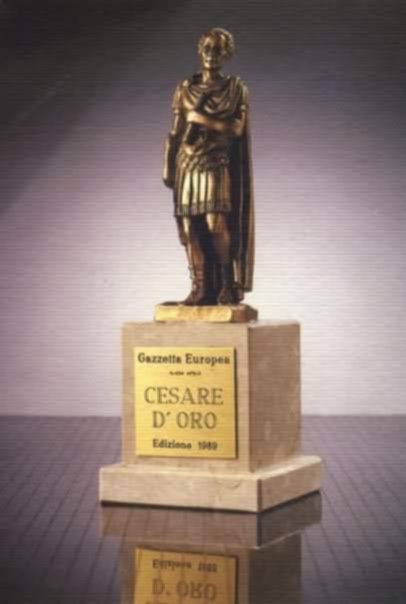
The International Award consists of a sculptural work depicting Julius Caesar and a calligraphed decree on vegetable parchment. In this current moment of global crisis, the Award aims to restore confidence and enthusiasm, founded on the cultural and spiritual heritage.
𝐂𝐡𝐢𝐞𝐟 𝐄𝐝𝐢𝐭𝐨𝐫 :
𝐌𝐝. 𝐒𝐚𝐝𝐢𝐤𝐮𝐫 𝐑𝐚𝐡𝐦𝐚𝐧 𝐑𝐮𝐦𝐞𝐧